Where we work
We work in partnership with 11 implementing territories across nine countries to deliver 19 community development projects.
Community development projects
Our international team of project coordinators go on field assignment trips to monitor and evaluate the progress of the projects. We have various development projects in different countries that are listed on the map (below). We implement community development projects in three zones across the globe, which include Africa Zone, South Asia Zone, and South Pacific and East Asia Zone. Within each of these zones, International Development works with a number local partners in select countries.
As a part of our vision to see a world restored, we supported 25 projects across nine countries, including two regional projects in Africa and Asia, in 2024-25. With the valuable support of our global partners, we are empowering men, women and children to realise their potential and become agents of change in their communities.
Together, we have helped our partners to provide communities with access to clean water, invomce-generation skills and safer environments for children and advocate for a fairer world.
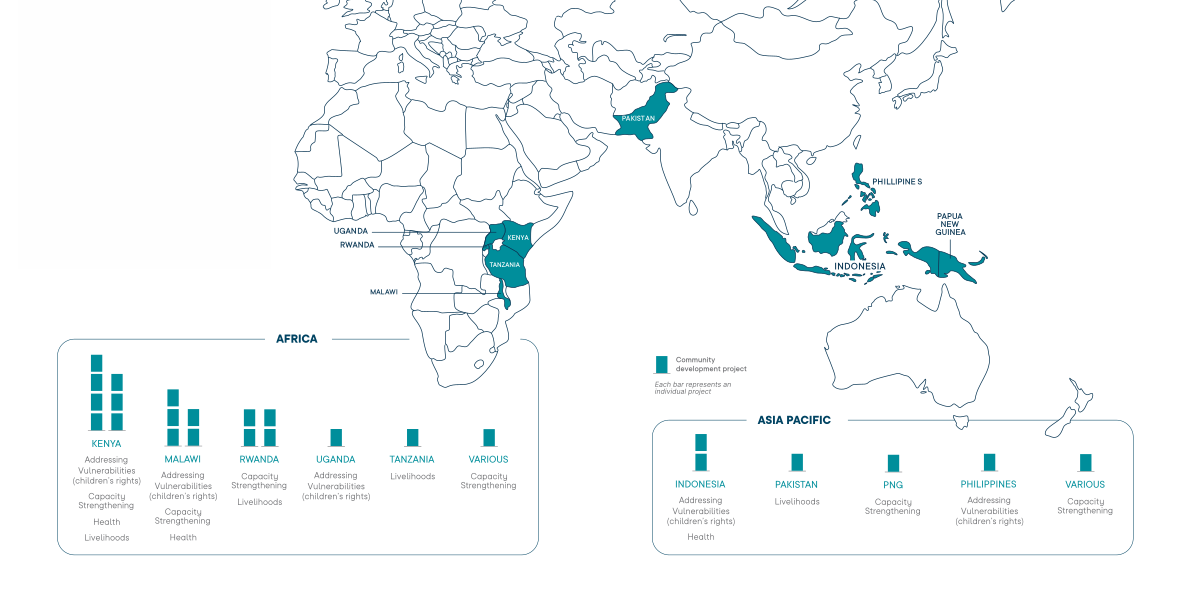
About this map
- This map shows locations where our Australian International Development office works. Overall, The Salvation Army is active in 128 countries globally, and other Salvation Army International Development offices (for example in the US and Europe) work in partnership with us to strategically distribute support across the globe.
- Only shows locations that partner in community development projects that are able to receive tax-deductible donations. As part of a global movement, there are other forms if international support provided by The Salvation Army Australia that are not reflected here.
Where do the funds go?
Funds raised from the gift catalogue and sponsorship will be used to deliver the programs. Every gift purchased through Salvos Gifts empowers communities to lift themselves out of poverty. The cost to implement each project varies. Therefore, when a project is fully funded, we direct excess funding to projects of a similar nature. This ensures the needs of the communities you support are met and that they have ownership of the project.
Priority support
