Our approach
How we work
Our focus is to work alongside communities every step of the way; from the process of ascertaining their needs to project delivery and self-sustainability.
We believe it is paramount to provide tools for sustainable programs and projects, to educate people and empower them to achieve their full potential, thus breaking the cycle of poverty. We realise this is not easily achieved, but believe that as we establish relationships with individuals and communities in partnership with our donors, we will see a much greater impact.
We serve without discrimination and share the Gospel where welcome. We are prompted by God’s love for us and the acknowledgement that all people are created in His image. So we place value and dignity upon humanity.
We can break the cycle of poverty
Our support
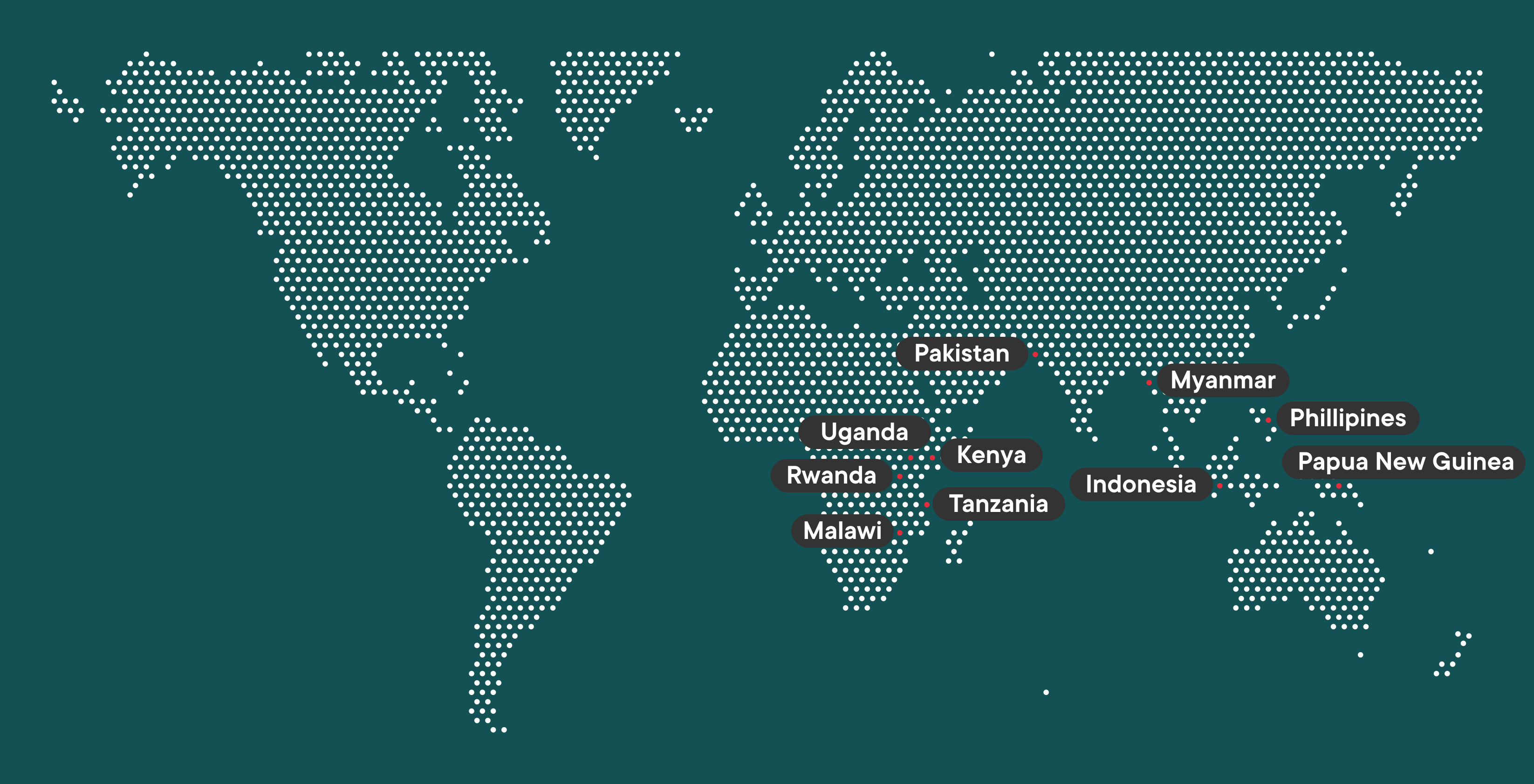
We support community development and capacity building by working in partnership with communities in Asia, Africa and the Pacific, and implement community development projects in our strategic focus countries, which include Kenya, Malawi, Tanzania, Pakistan, Myanmar, Malaysia, Indonesia, Papua New Guinea, Uganda, the Phillipines and Rwanda.
To achieve this, web have developed strong and long-term partnerships with The Salvation Army Territory in each of these focus countries. This allows us to build our partner, ensure high accountability for the funds, and deliver lasting change. The projects are implemented by our partner, often by an in-country project officer.
About community development
Our community development programs seek to identify and address the unique needs of the communities we serve. In addressing the root causes of poverty, together we can empower children, women and men to break the perpetuating cycle of poverty and build self-sustainable communities.
We are committed to holistic community development programs and projects focused on addressing three key areas, which align with the Sustainable Development Goals (SDGs):
- Livelihoods (SDG’s 2, 3 and 6)
- Water (SDG’s 4 and 8)
- Addressing Vulnerabilities (SDG’s 5 and 16)

Theory of Change
The Theory of Change helps us achieve our vision by providing measurable outcomes and a framework to guide our practices, operations and values.
Approach to participation and empowerment
We are committed to the inclusion and representation of those who are vulnerable and those who are affected by the intersecting drivers of marginalisation and exclusion, including not restricted to race, religion, ethnicity, indigeneity, disability, age, displacement, caste, gender, gender identity, sexuality, sexual orientation, poverty, class and socio-economic status.
Disability inclusion
SAID is committed to the inclusion of people with disabilities (PWDs). SAID incorporates disability inclusion as a cross-cutting issue in all development projects. At this stage SAID does not have any standalone projects targeting PWDs, however Disability is considered at all stages of the project management cycle. SAID analyses barriers to inclusion, intersectionality, and what opportunities there are for the participation, inclusion and empowerment of PWDs. SAID also works towards the inclusion of PWDs in project design, implementation, MEAL, and consideration of project risks, benefits, budgeting and engagement with disability persons organisations.
Gender equality and equity
SAID is committed to promoting gender equality and equity and to non-discrimination in regard to gender identity. SAID prioritises and advances gender equality and equity within organisational programming and internal operations. SAID incorporates gender as a cross-cutting issue in all development projects. Gender is also considered at all stages of the project management cycle. SAID analyses barriers to gender equality and women’s empowerment, prevailing social norms/gender roles/power relations, meaningful participation, positive and negative impacts of the proposed project, gender expertise and justification of design, budget and resourcing to fulfil gender equality aims.
Environmental sustainability
SAID ensures its interactions and practices are environmentally responsible and seeks to avoid depletion or degradation of natural resources and include environmental sustainability as a consideration in all decision making. SAID also aspires to minimise its impact on the environment in their internal operations, such as:
- Complying with all applicable legal and other environmental requirements
- Reducing or offsetting greenhouse gas emissions
- Use of renewable energy
Mission support
To maximise the effectiveness of community development programs and projects, our geographic focus is on countries that are, or have been, Salvation Army Partners in Mission - a name given to territories that have been linked by The International Salvation Army. Although we have a strong focus on community development, we also support the advancement of the evangelical mission of The Salvation Army overseas, with non-tax deductible funding.
Priority support
