
Our history
The desire to make music unto the Lord
The Salvation Army — very early in its Australian history in the early 1900s — formed groups known by such names as ‘The Speaking, Singing and Praying Brigade’ and the ‘Western Musical Company’.
They are a band of blood and fire...
These early groups became popular
They paved the way for the dispatch of the Federal Choralists for a tour of West and South Australia. Made up of seven ladies and five men, the brigade also included five members who were from New Zealand.
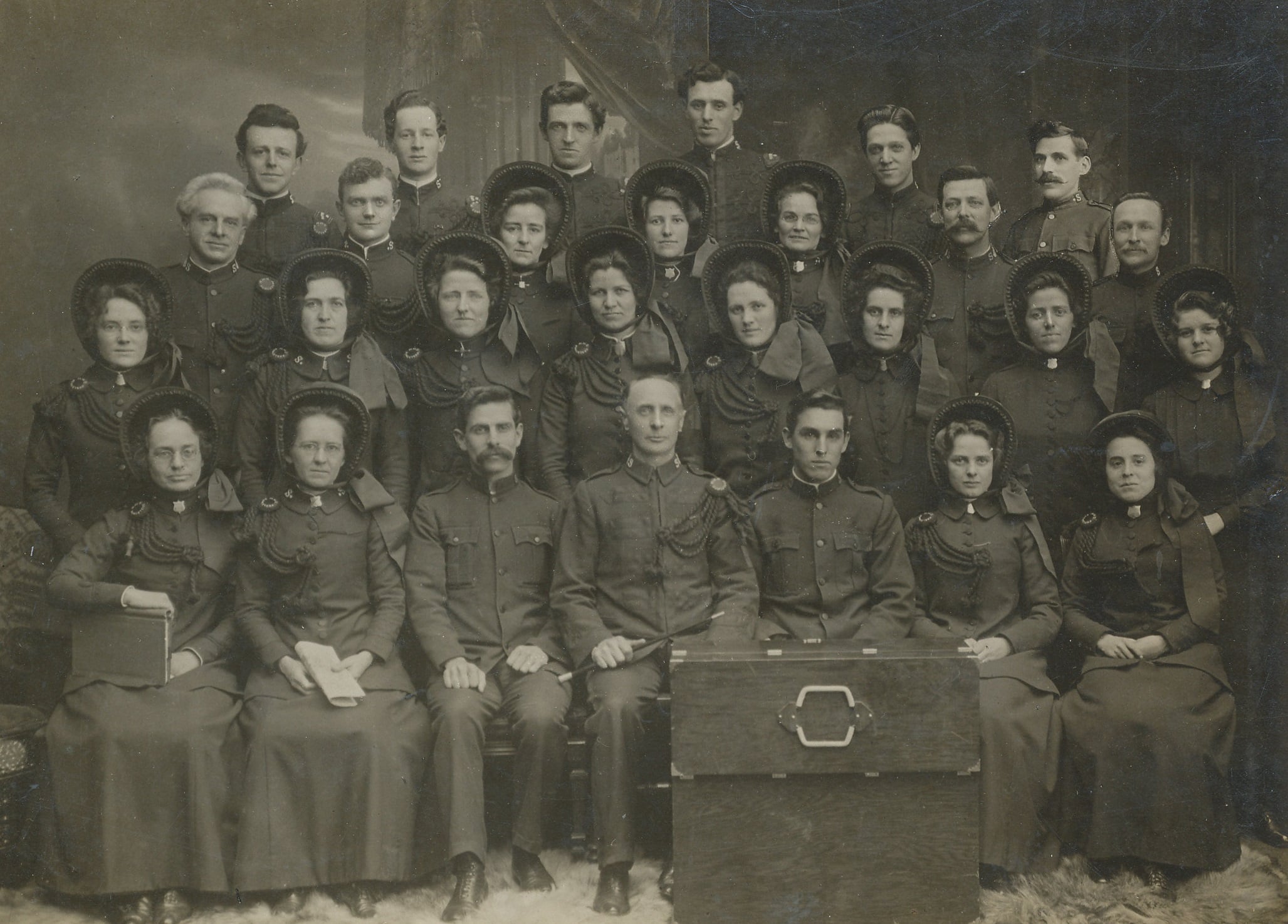
The brigade continued in this form until 1933
The years that followed saw a succession of ‘staff type’ groups under various titles.
Then, in 1978 during the rehearsals for The Salvation Army musical Glory (Gowans and Larsson) several cast members discussed the possibility of forming a special group of singers within the ranks of The Salvation Army. This led to the formation of ‘The Masters Singers’.
This was a small group of well-credentialled and mostly professionally taught singers. At the group’s transformation into the larger Melbourne Staff Songsters in 1987, General Eva Burrows wrote, “The Master’s Singers maintained a standard of excellence in musical performance and revealed a powerful spiritual impact through their festivals” (The Musician, 2 May 1987).
On 11 April 1987, 25 songsters from around Melbourne — under the leadership of Owen Harris and Executive Officer Lieut-Colonel Keith Earl — were inaugurated as the Melbourne Staff Songsters by Commissioner Donald Campbell.
“As with all other sections of The Salvation Army, the objective is to proclaim the gospel of our Lord and Saviour Jesus Christ. The anticipated high standard of performance is intended to be an encouragement to every Salvationist musician, with derived benefits flowing on into corps sections,” wrote Commissioner Campbell in The Musician, 2 May 1987.
Never were such crowds seen here before
The group has changed over the years in leaders as well as singers
Rod Reeve took over the leadership of the Melbourne Staff Songsters in 1989 after holding the deputy leadership role since April 1987. Rod retained this position for 14 years until his retirement in 2003.
Brian Hogg was then appointed songster leader — a position he held from January 2004 until December 2014. Merryn Steel then took over as songster leader from January 2015 until December 2020.
Past executive officers
- Lieut-Colonel Keith Earl
- Lieut-Colonel Denis Lorimer
- Lieut-Colonel Ian Begley
- Major Ian Smith
- Major Iain Trainor
- Major Brian Mundy
- Lieut-Colonel Pam Trigg
- Major Leanne Ruthven
- Major Laurie Robertson
- Major Judith Soeters
- Major Pamela Marshall
- Major Heather Jenkins
- Majors Paul and Wendy Hateley
- Majors Judith and Mark Soeters
- Captain Paul Lorimer
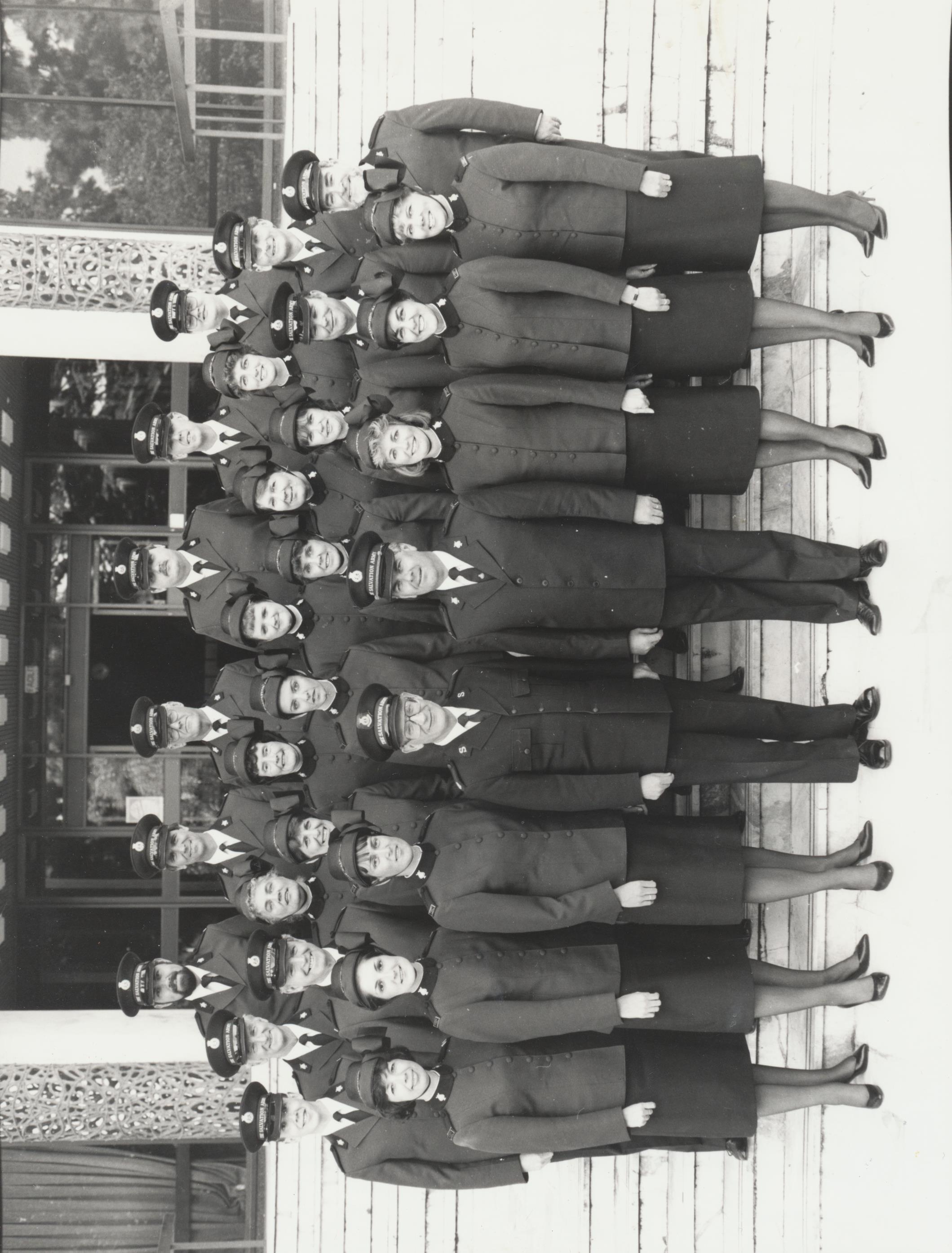
The Masters Singers

30 July 1983

18 May 1985

28 June 1986
Join us
