

Articles
Mini budget - Saving for something specific
This mini-budget is designed to help you plan and save for specific major events or items. For example, it may help you have a successful summer holiday or purchase your next car.
One of the many tricky things about doing a budget is knowing which question to begin with:
How much is X going to cost?
OR
How much money do I have to spend on X?
For a budget to work, we need to know the answer to both of these!
What's your spending limit?
Let's start here. This part is easy if you only ever spend what you have saved up and don't borrow. You need to know three things to work this out.
- How much do I already have saved?
- How much can I save each week/fortnight/month?
- How many weeks/fortnights/months until my major event/purchase?
E.g. Alex has $3000 already saved up for a new car. She works out she can save $100 per week. She wants to buy a car by the Easter holidays, which are 15 weeks away.
$3000 + ($100 x 15) = $4500. He knows he can spend up to $4500 on a car.
How much will it cost?
You already know your spending limit, so this part is just listing all the costs. A spending plan helps break the costs into sections, so you don't miss anything.
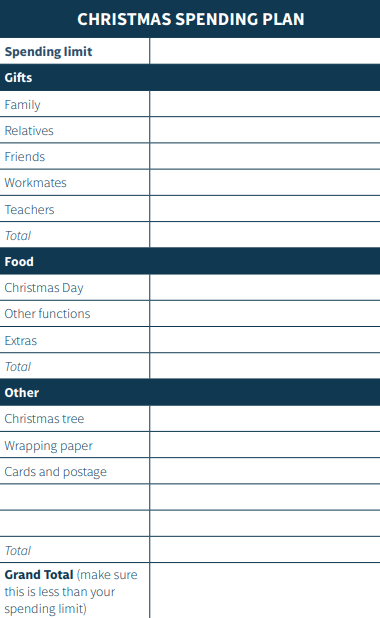
Here's an example of a Christmas plan.
Put your spending limit at the top and check that your total at the bottom is the same or less than what you have available.
Related news


